Online Hot Spot Refractory Repair & Maintenance Services
SLPSB provides online hot spot refractory repair for boilers, furnaces, and kilns, allowing damaged refractory linings to be repaired while your plant remains fully operational. No total shutdown is required.
With over 45 years of experience serving petrochemical plants, refineries, and major industrial facilities across Malaysia, our engineers carry out hot spot repairs using a controlled pumping system and specially-developed refractory mix.
What Is a Hot Spot?
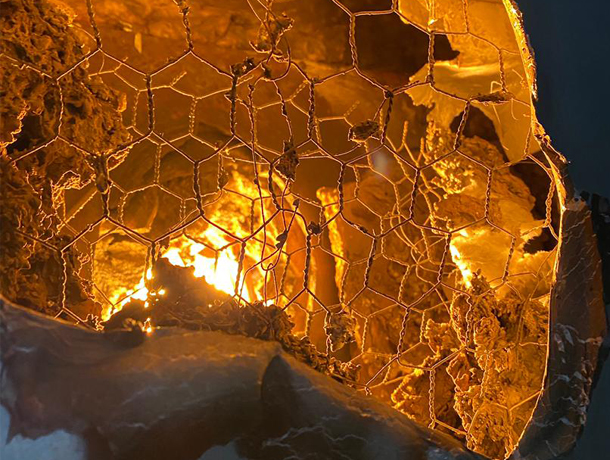
A hot spot is a localised area on your boiler or furnace shell where surface temperature is significantly higher than surrounding areas. It indicates the refractory lining behind that point has thinned, cracked, or failed. Left unaddressed, hot spots accelerate shell corrosion and risk unplanned emergency shutdowns.
Left unaddressed, hot spots lead to:
- Accelerated shell corrosion and structural weakening
- Risk of catastrophic shell failure
- Unplanned emergency shutdowns
- Significant production losses and repair costs
Online hot spot repair addresses the damaged lining from outside the equipment while it continues to operate at temperature, eliminating the need for a full plant shutdown to carry out refractory repairs.
Our Hot Spot Repair Process
While the system remains in operation, our engineers carry out repairs in the following steps:
-
Drill
Holes are drilled through the casting plate at the hot spot location.
-
Weld Couplings
Couplings are welded onto the drilled holes as injection ports.
-
Inject
A specially-developed pumping mix is injected through the couplings to fill the void behind the shell.
-
Monitor
Pressure change indicates when the void is completely filled.
-
Seal
Drilled holes and couplings are sealed. The repaired area cools to below the surrounding surface temperature, confirming the repair is complete.
Our refractory engineering products and installation expertise support every repair from assessment to completion.
Frequently Asked Questions
Can hot spot repair be carried out while my boiler is running?
Yes. SLPSB's online hot spot repair method is designed to be carried out while the system remains fully operational. No shutdown of the boiler, furnace, or kiln is required during the repair process.
What equipment does SLPSB perform online hot spot repair on?
SLPSB performs online hot spot repair on boilers, furnaces, and kilns across the petrochemical, refinery, power generation, cement, and waste incineration industries.
How do I know if my equipment needs hot spot repair?
Hot spots are visible as localised areas of elevated temperature on the outer shell of the equipment. If you can see discolouration, paint scorching, or measure surface temperatures significantly above surrounding areas, the refractory lining behind that point has likely thinned or failed and should be assessed.
Does SLPSB provide a site assessment before repair?
Yes. Contact our team to arrange an on-site assessment. Our engineers will evaluate the hot spot location, size, and severity and recommend the appropriate course of action.